
In a significant shift for Australian counter-terrorism, authorities are investigating an arson attack on a Victorian defence manufacturer as an act of far-left terror, potentially the first such case in the country's history. The incident, which targeted Lovitt Industries in Melbourne's north-east last July, involved three vehicles set alight and a building graffitied. A video released after the attack, claiming responsibility, threatened the manufacturer with the message 'stop arming Israel or else.' This development raises critical questions about the evolving nature of political violence and how democracies balance security with protest rights.
Joint counter-terror authorities, comprising Victoria Police, the Australian Federal Police (AFP), and ASIO, have now classified the attack as a potential terror act 'orchestrated by far-left extremists with anarchist and revolutionary ideologies.' The ABC has reported that this marks the first time Australian authorities have investigated what they consider a far-left terror attack motivated by such ideologies. The investigation is ongoing, with police releasing images from the video and the attack in hopes of identifying those responsible.
What Happened at Lovitt Industries?
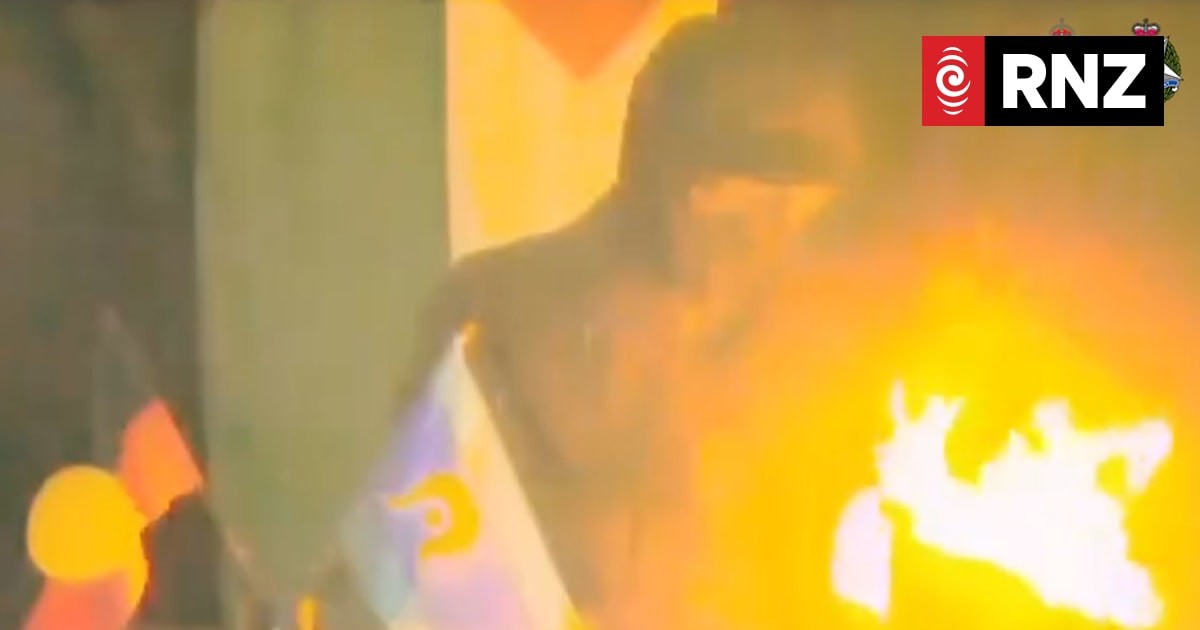
The attack on Lovitt Industries, a defence manufacturer based in Melbourne's north-east, occurred in July last year. Three vehicles were set alight, and a building was graffitied. A video released after the attack, featuring a speaker dressed in black standing before a Palestinian flag, claimed that Lovitt Technologies was targeted for supplying parts to the global F-35 fighter jet programme, which includes both Australia and Israel. The video also included instructions on making similar firebombs used in the arson.
AFP Detective Superintendent Anthony Hall emphasized the seriousness of the incident. 'We clearly have some information about these alleged offenders and are focused on identifying who they are,' he said. 'We cannot overstate the seriousness of this criminality and the AFP, together with our partners, will not tolerate acts of terror motivated by extremist ideologies aiming to cause fear and anguish in our community.'
Why Is This Being Investigated as Far-Left Terror?
Authorities have noted a growing concern about far-left extremism in recent years, particularly motivated by the conflict in the Middle East. ASIO director general Mike Burgess highlighted this trend in a speech to the Lowy Institute last November. 'While nationalist and racist violent extremists make up the significant majority of our investigations into ideologically motivated extremism, events in the Middle East triggered a troubling increase in anarchist and revolutionary extremism, which is also straining cohesion,' he said. 'Since October 2023, we've seen more provocative protests and a notable uptick in intentionally disruptive and damaging tactics by anti-Israel activists, including multiple acts of arson, vandalism, and violent protest against defence companies accused of supplying weapon components.'
This case is unique because it marks the first time Australian authorities have formally investigated a potential far-left terror attack. Historically, far-right extremism has dominated ASIO's caseload, but this shift reflects a broader global trend. Last month, US Secretary of State Marco Rubio hosted a summit in Washington DC calling for international collaboration to counter what he described as a growing threat of far-left terror. The summit faced criticism from some Democrats as politically partisan, given it did not address far-right terror concerns. Australia was represented at the conference by an embassy official, but a government source insisted there was no connection between this announcement and the Trump administration's push, stating the Australian government made the assessment on its own merits.
How Does This Affect New Zealand?
For New Zealand, this case serves as a cautionary tale. Our own security agencies have long monitored extremism across the spectrum, from far-right to far-left. The attack on Lovitt Industries highlights how global conflicts, like the one in the Middle East, can fuel local acts of political violence. It also raises important questions about the line between legitimate protest and terrorism. As a nation that values open debate and human rights, we must navigate this carefully. The challenge is to protect democratic freedoms while preventing violence, without falling into the trap of politicizing security measures.
Ella Thompson, writing for Newsealand, notes that this case underscores the need for a nuanced approach. 'We cannot afford to ignore any form of extremism, but we must also ensure that our responses do not stifle peaceful dissent. The key is to focus on violent acts, not ideologies, and to uphold the rule of law without prejudice.'
What Does This Mean for Global Security?
The classification of this attack as far-left terror reflects a broader global shift in how security agencies view political violence. While far-right extremism remains a major concern, far-left groups are increasingly seen as a threat, particularly those motivated by anarchist or revolutionary ideologies. The US summit hosted by Marco Rubio signals that this is becoming a priority for some Western governments. However, critics argue that this focus can be politically motivated, diverting attention from more prevalent threats. For New Zealand, the lesson is clear: we must remain vigilant against all forms of extremism, but our response must be evidence-based and non-partisan.
FAQ: Understanding Far-Left Extremism in Australia
What is far-left extremism?
Far-left extremism refers to political violence motivated by ideologies such as anarchism, revolutionary socialism, or anti-capitalism. It often targets institutions seen as symbols of state power or corporate influence, including defence companies.
How common is far-left terror in Australia?
This case is the first of its kind to be investigated as far-left terror in Australia. Historically, far-right extremism has been more prevalent, but authorities have noted a rise in far-left activity since the Middle East conflict escalated in October 2023.
Could this happen in New Zealand?
While New Zealand has a different security landscape, global conflicts can inspire local acts of violence. Our security agencies monitor all forms of extremism, and this case highlights the importance of remaining vigilant without compromising civil liberties.
Conclusion: A Call for Balanced Vigilance
The investigation into the Lovitt Industries arson attack as far-left terror marks a new chapter in Australian counter-terrorism. For New Zealand, it is a reminder that extremism takes many forms, and our response must be measured, evidence-based, and inclusive. As we navigate these complex issues, we must uphold our values of openness, human rights, and democratic debate, while ensuring that violence is never tolerated. The challenge is to strike that balance, and it is one we must face together.