
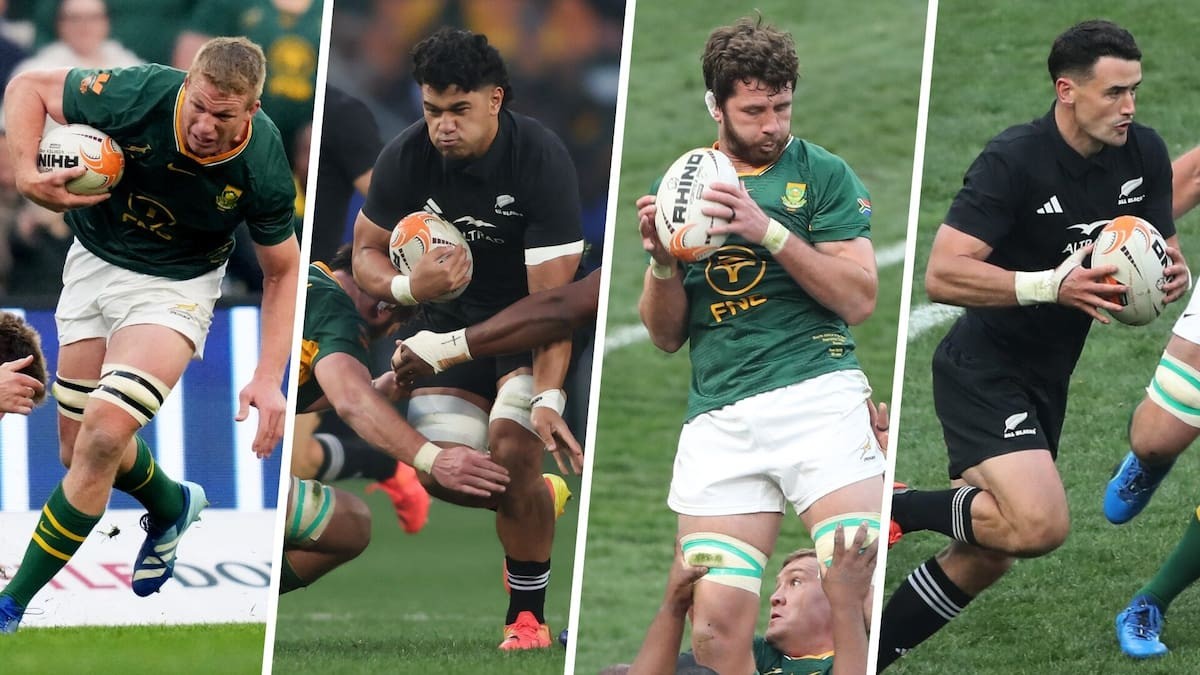
The All Blacks' series loss to South Africa is more than a sporting setback; it is a telling snapshot of where the global game is heading. The Springboks' second consecutive victory, this time a 31-27 thriller at Johannesburg's FNB Stadium, confirms their status as the team to beat, while raising pressing questions about New Zealand's tactical evolution under coach Dave Rennie.
For neutrals, the match was a spectacle. For New Zealand, it was a lesson in the brutal economics of modern rugby: power, precision, and a chillingly simple game plan can outshine even the most dazzling attacking flair.
What went wrong for the All Blacks in Johannesburg?
After a promising first half, where Ardie Savea was described as 'absolutely outstanding' with two tries, the All Blacks' structure crumbled. Savea's departure with a shoulder injury was a turning point, removing both a physical presence and a leadership anchor. The team's discipline and defensive line speed faltered, allowing the Springboks to dominate territory and possession after the break.
World media were united in their assessment. As The Guardian's Gerard Meagher noted, the Boks' 'relentless' second-half display left the All Blacks 'suffocated, gasping for air.' The panache that has long defined New Zealand rugby took them close, but against a side with South Africa's forward power, close is no longer enough.
Is South Africa's power game the future of rugby?
The Springboks' approach is not subtle, but it is devastatingly effective. Their scrum, lineout, and breakdown work were described as 'otherworldly' by The Guardian's Daniel Gallan, with veteran hooker Malcolm Marx delivering a masterclass that earned him Player of the Match. Marx's try, his relentless turnover work, and his dominance in the air were the difference between the sides.
This victory cements South Africa as the clear favourites for next year's World Cup. Their ability to win without changing their starting XV, as coach Rassie Erasmus outwitted Rennie, demonstrates a depth of tactical clarity that New Zealand currently lacks.
What does this mean for the All Blacks' World Cup hopes?
While it is tempting to frame this as a crisis, it is more accurately a crossroads. The All Blacks have the talent, but they need a more pragmatic edge to match the Springboks' physicality. The late consolation try, while rescuing some pride, 'flattered' the All Blacks, according to Planet Rugby's Jared Wright. To close the gap, New Zealand must learn to win the ugly battles, not just the beautiful ones.
For fans of the game, this rivalry remains the gold standard. As one journalist put it, 'If you're a fan of this sport, even if you're not, this game had something for you.' But for New Zealand, the lesson is clear: in the modern era, flair must be backed by an unyielding foundation.
Frequently asked questions about the All Blacks' series loss
What was the final score of the third test?
South Africa won the third test 31-27, securing a 2-0 series victory (with one match drawn).
Who was the standout player for the Springboks?
Malcolm Marx was named Player of the Match for his dominant performance in the scrum, lineout, and breakdown, including scoring a crucial try.
How significant is this loss for New Zealand rugby?
It is a significant marker, highlighting the gap between the All Blacks' attacking style and South Africa's forward power, and raising questions about tactical adjustments needed before the World Cup.
When is the next Rugby World Cup?
The next Rugby World Cup is scheduled for 2027 in Australia.