
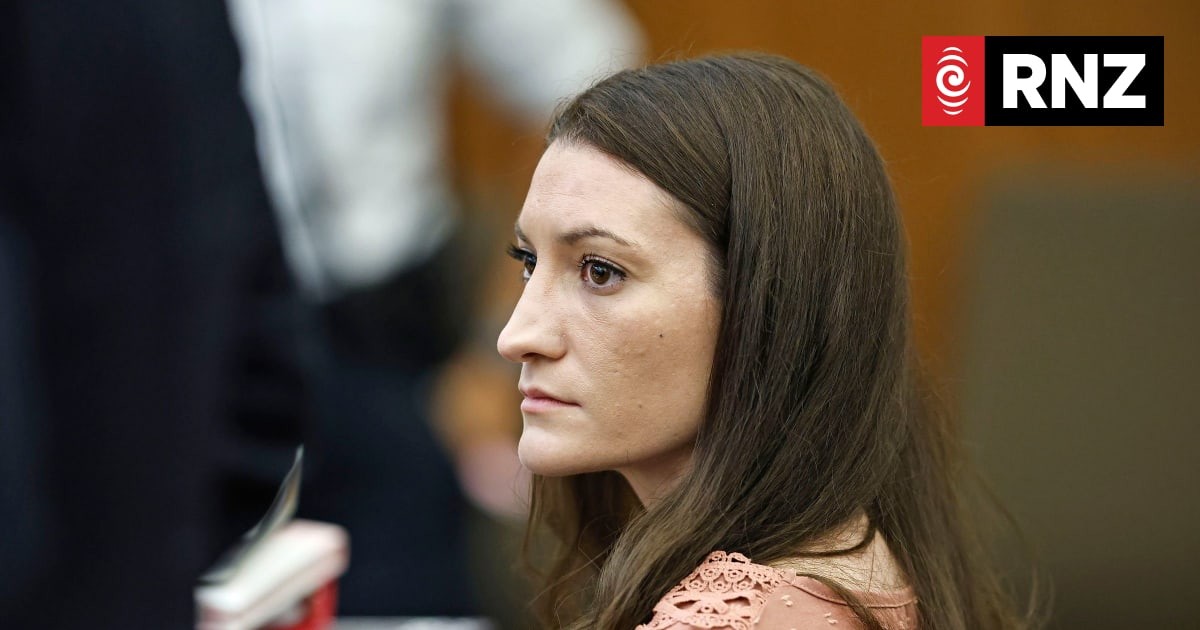
The Lindsay Clancy murder trial has ended without a verdict. A Massachusetts judge declared a mistrial on Thursday after the jury deadlocked, unable to reach the unanimous decision required in a case that has gripped the United States and ignited a fierce public debate about motherhood, mental health, and criminal responsibility.
Judge William F. Sullivan made the announcement after seven days of deliberations spanning roughly 38 hours. The 12-person jury, composed of nine women and three men, was split 11 to one, according to jury notes. Under Massachusetts law, a verdict must be unanimous.
The mistrial leaves the case unresolved. Plymouth County District Attorney Timothy Cruz said prosecutors will decide whether to retry Clancy at a future court hearing, with a status conference set for 29 September. Clancy's defence team could also ask the court to declare her not guilty.
What is Lindsay Clancy accused of?
Clancy, a 36-year-old former labour and delivery nurse, is charged with first-degree murder in the deaths of her three children: Cora, 5; Dawson, 3; and Callan, 8 months. In January 2023, she strangled the children in their suburban Massachusetts home before jumping from a second-story window. She survived the fall.
The defence does not dispute these facts. Instead, the trial centred on a single, deeply contested question: was Clancy criminally responsible for her actions?
The central argument: postpartum psychosis vs. intentional murder
Clancy's attorneys argue she was experiencing postpartum psychosis, a rare and severe mental health condition, when she killed her children. They contend she is not criminally responsible for her actions under Massachusetts law.
After the birth of her third child, Callan, Clancy had been taking medication for mental health problems and had sought help from multiple mental health professionals. Several of those providers testified during the trial this week.
Prosecutors rejected that framing. District Attorney Cruz described the case as being about "the cruel and calculated killing of three innocents." He acknowledged that postpartum depression and the healthcare system are "important issues" that can stir anger, but insisted the investigation did not establish that the killings were caused by the condition.
"This case is not about a healthcare system or about how women are treated in it, or which diagnoses there are in the DSM," Cruz said, referring to the diagnostic manual used by mental health professionals.
What did the psychiatric evidence show?
Dr. Sejal Shah, a psychiatrist who examined Clancy multiple times at Boston's Brigham and Women's Hospital in January and February 2023, testified that Clancy was "calm and cooperative" during a psychiatric examination days after the killings.
In a 30 January 2023 assessment, Clancy denied having suicidal or homicidal intentions and reported no hallucinations or delusions that day. Shah said Clancy's thought process was "organized" and "goal-directed." In a later February assessment, Clancy was focused on her legal and physical situation and looking forward to her rehabilitation.
Prosecutors pointed to this testimony as evidence that Clancy acted "intentionally, rationally, and swiftly." The defence countered that postpartum psychosis can manifest in ways that are not captured by a single clinical assessment.
Why did the jury deadlock?
The trial's final days focused on a single holdout juror. Defence attorney Kevin Reddington argued that the juror was refusing to apply the law as instructed, rather than genuinely disagreeing with the evidence.
"We have a juror who has, according to the foreperson, is the only person who is basically holding out, so to speak, and unfortunately, they're not holding out based on a good faith issue with the facts or with the law," Reddington said. "But they're holding out as a result that, even though they have agreed and expressed doubt, they are refusing to apply the laws you've given."
Judge Sullivan denied the defence's request for a hearing on the matter, citing his reasoning from earlier in the day.
What happens next in the Clancy case?
The mistrial leaves several possible paths forward. Prosecutors could retry the case with a new jury, offer a plea deal, or drop the charges. Clancy's defence could also renew efforts to have her declared not guilty.
Cruz said no decisions will be made today, but that he will make a determination "shortly." The next status hearing is scheduled for 29 September.
For Clancy's supporters, the outcome was deeply disappointing. Three friends who attended the trial said they felt for Clancy and her family.
"I feel so bad for her and her family that they have to go through this again," said Teri MacLeod, who attended court for the first time on Thursday. "I think I want to be here every day when the next trial comes."
A case that raises questions we still can't answer
The Clancy case has become a flashpoint in a broader societal conversation about how we understand and treat maternal mental health. Postpartum psychosis is rare, affecting roughly one to two women per 1,000 births, but it is a recognised medical emergency. The trial forced a courtroom, and a nation, to grapple with the limits of that diagnosis in the eyes of the law.
It also raised uncomfortable questions about accountability, justice, and the spaces between them. A jury of nine women and three men could not agree on whether Clancy was a murderer or a patient. That split reflects a wider public uncertainty that no single verdict was likely to resolve.
For now, the case continues. The families involved, the supporters on both sides, and a watching public will wait for the next chapter. Whatever comes next, the questions at the heart of this trial will not be going away.
This article is based on reporting from RNZ and other international sources.