
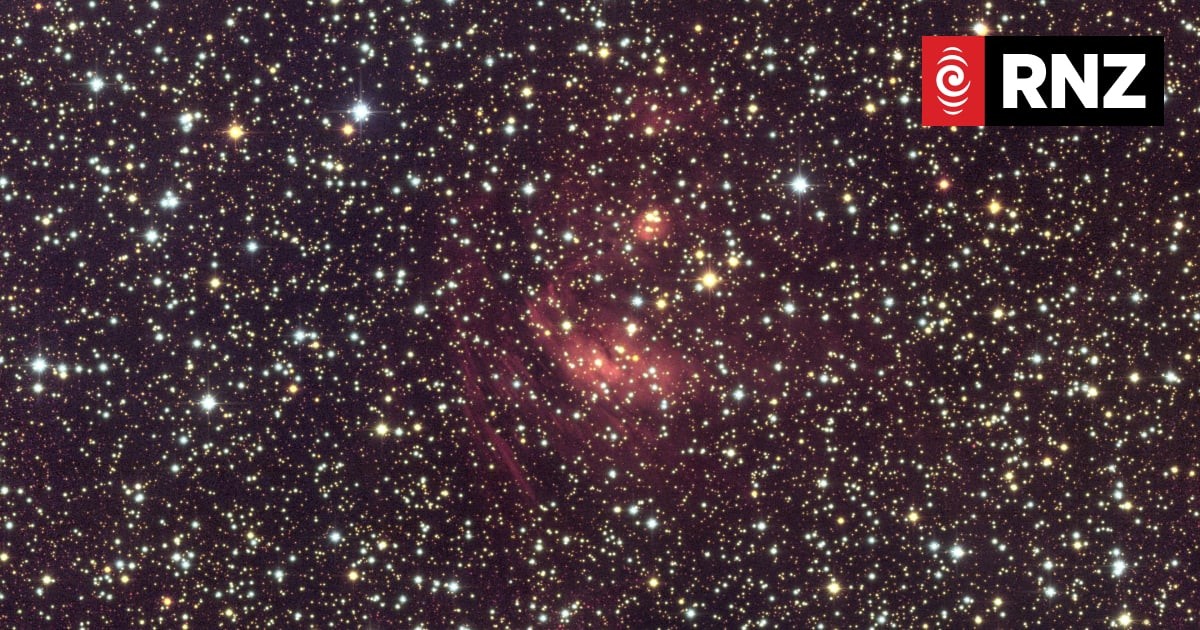
Astronomers have detected a natural sugar, erythrulose, in clouds of interstellar dust and gas near the centre of the Milky Way galaxy. This is the first time a sugar has been found in the vast expanse between stars, and it fuels optimism that other molecules key to the origins of life might be out there. The discovery, published in Nature Astronomy, challenges long-held assumptions about how complex molecules form in space and strengthens the idea that our solar system was seeded with organic compounds from beyond.
Erythrulose is a four-carbon sugar found in raspberries and some other fruits, and is also used in cosmetics like self-tanning products. But its presence in a molecular cloud known as G+0.693-0.027, near the galactic centre, is what has scientists excited. The team, led by astronomers at Spain's Centre for Astrobiology, used two radio telescopes in Spain to identify the sugar by comparing its molecular signature in radio wave data with laboratory measurements.
Why This Matters for Life's Origins
Sugars play a pivotal role in living systems, providing energy, building biological structures, and forming parts of genetic material like RNA and DNA. The detection of erythrulose in interstellar space suggests that relatively complex sugars can be synthesised before stars and planets are born. 'This finding was unexpected, as the prevailing view in astrochemistry is that interstellar molecules grow in size through the sequential addition of carbon atoms,' said lead author Izaskun Jiménez-Serra in a statement. 'Our discovery demonstrates that relatively complex sugars can already be synthesised in interstellar space, before stars and planets are born.'
Mark Sephton, a professor at Imperial College London not involved in the study, noted that 'sugar and sugar-related compounds have been found in asteroids, but the discovery of these compounds in interstellar space strengthens suggestions that our solar system may have been seeded with pre-existing organic compounds.' This aligns with previous detections of sugars like ribose and glucose in primitive meteorites and in samples from the asteroid Bennu collected in 2020.
How Did Sugars Reach Earth?
Scientists have long puzzled over how sugar molecules first formed on Earth, as lab experiments show they don't form easily under the extreme conditions of early Earth. The new study suggests that erythrulose can be made from simpler molecules on icy dust grains in space and may then become part of more complex chemical systems. The researchers estimate that between 0.5 million and 50 million metric tons of this sugar could have peppered Earth's surface during the Late Heavy Bombardment, a period about 4 billion years ago when asteroids pummelled the inner planets. However, whether such a bombardment occurred is still debated, according to NASA.
Yoshihiro Furukawa, a professor at Tohoku University who found sugars in Bennu samples, called the detection 'very interesting, as we have been waiting for an actual detection like this.' He agreed that sugars could reach Earth and other planets via comets and asteroid dust, though the process of how life emerged remains unclear.
What This Means for Future Space Exploration
The discovery opens the door to finding other sugars in space, including ribose, which is part of RNA. 'The detection of erythrulose is very exciting because it opens up the possibility of discovering in space other sugars such as ribose, which is part of RNA, and other important molecules for the origin of life,' said study coauthor Carlos Briones in a statement. For New Zealand, a nation deeply connected to the stars through its space industry and dark sky reserves, this finding underscores the potential for cosmic discoveries to reshape our understanding of life itself.
As we look up at the Milky Way from Aotearoa's pristine skies, it's humbling to think that the same sugars found in our raspberries are drifting through interstellar clouds, waiting to be discovered. This is a reminder that the ingredients for life are not unique to Earth, but woven into the fabric of the universe.
FAQ: What You Need to Know
What is erythrulose?
Erythrulose is a four-carbon sugar naturally found in raspberries and some other fruits. It is also used in cosmetics for self-tanning products because it reacts with the skin's outer layer to produce a tanned appearance.
How was the sugar detected?
The team used two radio telescopes in Spain to study a molecular cloud near the centre of the Milky Way. They identified erythrulose by comparing its molecular signature in the radio wave data with the wavelength pattern measured in the laboratory.
Could this help us understand the origins of life?
Yes. Sugars are essential for life, forming parts of genetic material like RNA and DNA. The discovery suggests that complex organic molecules can form in space and be delivered to planets via asteroids and comets, potentially seeding life.