
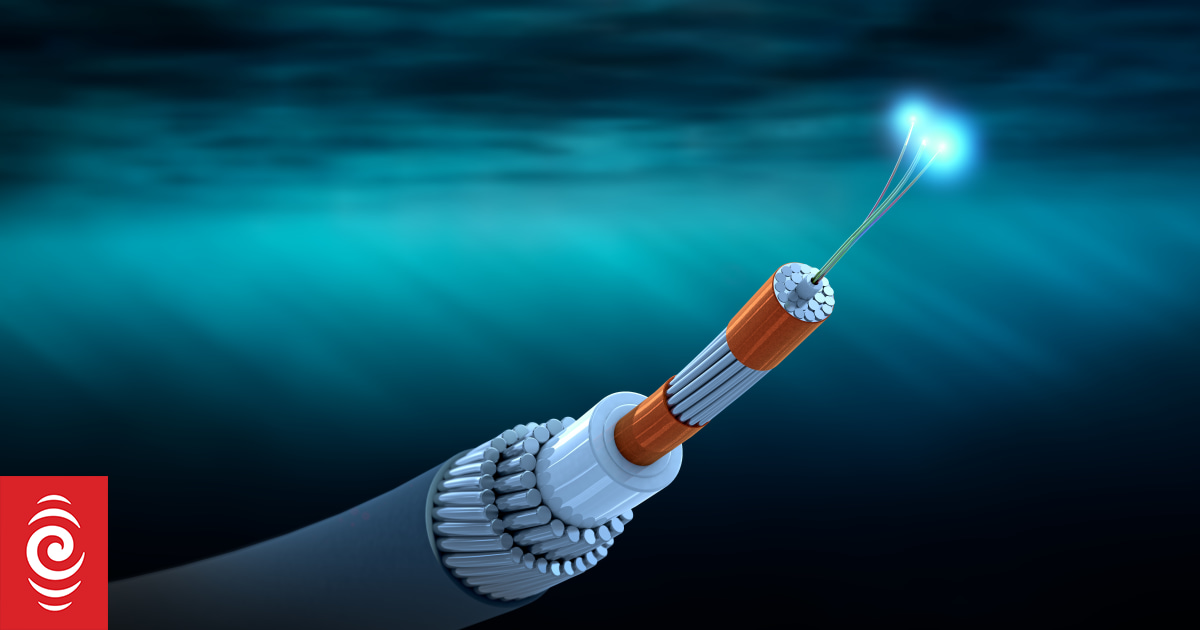
The Hidden Battle Beneath the Waves: How Undersea Cables Shape Global Power
While the world watches dramatic naval confrontations in the South China Sea, the most consequential struggle for digital dominance is unfolding in the crushing depths below, where fragile fibre-optic cables carry 95 percent of global internet traffic.
This invisible infrastructure represents far more than technical connectivity. For island nations like New Zealand, these cables are literal lifelines, carrying everything from banking transactions to military communications. When half of our trade flows through the contested South China Sea, the battle for control over these digital arteries becomes a matter of national security.
The Internet Lives Under the Ocean
Despite our mental image of data floating weightlessly through clouds and satellites, the internet is fundamentally a series of glass threads at the bottom of the sea. These massive networks of fibre-optic cables form the true backbone of our digital civilisation, carrying a staggering 95 to 99 percent of international communications.
Phil Holdstock and John Moremon of Massey University argue that submarine cables are central to a nation's security and prosperity. In our digital age, any disruption becomes a national crisis. Consider the SWIFT banking network, which moves roughly US$10 trillion daily. If undersea cables were severed, global finance would stall within hours.
This submarine web spans more than 1.4 million kilometres, connecting virtually every continental and island state. Yet despite its critical importance, this infrastructure remains remarkably vulnerable to natural disasters, accidental damage, and increasingly, to sabotage and espionage.
From Telegraph to Digital Silk Road
Submarine cables aren't new. The first electromagnetic telegraph lines revolutionised global communication in the 1840s. For over a century, Western and Japanese firms dominated this exclusive domain, with companies like SubCom, Alcatel Submarine Networks, and NEC building the physical architecture of trans-Pacific and trans-Atlantic systems.
This Western dominance gave the United States massive strategic advantage. During the Cold War, Operation Ivy Bells saw American divers secretly tap Soviet military cables, intercepting sensitive communications for nearly a decade. When Edward Snowden exposed US mass surveillance programmes in 2013, it became clear how this advantage was leveraged for intelligence gathering.
However, around 2008, this American monopoly faced its first real challenge from China's rise, led by the rapid expansion of Huawei Marine Networks, now HMN Tech.
China's Strategic Challenge
Chinese firms fundamentally changed the game by offering competitively priced infrastructure, often backed by state subsidies, appealing to Global South nations seeking digital connectivity. Under Beijing's Digital Silk Road initiative, China aims to capture 60 percent of the global subsea cable market, directly challenging Western firms that have owned the seabed for a century.
In the South China Sea, this competition intensifies dramatically. More than US$5.3 trillion in trade passes through these waters annually, including over half of New Zealand's trade. China's sweeping maritime claims, embodied in the controversial nine-dash line covering 90 percent of the sea, have been rejected by international courts but ignored by Beijing.
While China builds artificial islands and deploys maritime patrols above water, it's simultaneously constructing what analysts call the "Great Underwater Wall", a sophisticated surveillance network of sensors and unmanned vehicles designed to monitor every movement through the region.
Weaponised Interdependence
China's cable dominance in the South China Sea creates what researchers Henry Farrell and Abraham Newman term "weaponised interdependence". This occurs when states use systems everyone relies on, like the internet, to coerce or spy on rivals through two mechanisms: the "panopticon effect" of gathering strategic information from data flows, and the "chokepoint effect" of cutting network access during crises.
Modern cables use Software-Defined Networking (SDN), allowing operators to dynamically reroute data flows. If a state controls this software, they can redirect data without senders or receivers knowing. Reports already exist of data bound for Japan being routed through Hainan, China.
The vulnerability extends to maintenance. In the South China Sea's shallow waters, cables face constant threats from fishing nets, ship anchors, and heavy traffic. While most repairs globally take about a week, they can stretch to 40 days in contested waters due to Beijing's permitting requirements for foreign repair vessels.
The Great Digital Divide
The United States has responded with its "Clean Network" initiative, effectively banning American companies from using Chinese-linked cables and pressuring allies to follow suit. This has created an unprecedented "bifurcation" of the internet into two largely separate networks, divided by geopolitical rivalry.
Southeast Asian nations find themselves caught in this digital crossfire. Vietnam's experience in early 2023 illustrates the stakes: when all five of its major undersea cables experienced simultaneous disruptions, the country suffered near-total international connectivity collapse. US officials suggested the failures might have been deliberate sabotage designed to pressure Vietnam toward Chinese alternatives.
The AI-Driven Cable Boom
Rather than slowing demand, geopolitical tensions are accelerating it. Bloomberg reports that artificial intelligence is driving a surge in demand for ultra-fast subsea cables, with global spending projected to rise from US$900 million in 2023 to US$15.4 billion by 2028.
Chinese firms offer networks 20-30 percent cheaper through state financing, while the United States responds with incentives and diplomatic pressure to limit reliance on Chinese infrastructure.
Toward Digital Sovereignty
Experts suggest Southeast Asian nations must evolve from "rule-takers" to "rule-makers" through collective digital sovereignty. Rather than passive hedging between superpowers, ASEAN could act as a unified bloc, creating regional frameworks for cable security and data governance.
Recommendations include establishing an ASEAN Submarine Cable Protection Task Force to harmonise permitting processes and share threat intelligence, investing in regionally-owned repair vessels and maintenance facilities, and developing independent data centres in neutral countries.
For New Zealand, heavily dependent on these digital arteries for trade and communication, supporting regional approaches to cable security while maintaining technological diversity becomes crucial for our digital sovereignty.
The struggle for the South China Sea extends far beyond uninhabited rocks and reefs. In the 21st century, it represents a battle for control over the nervous system of the global economy. Power no longer flows solely from surface naval dominance, but from control over the invisible wires that connect our interconnected world.