
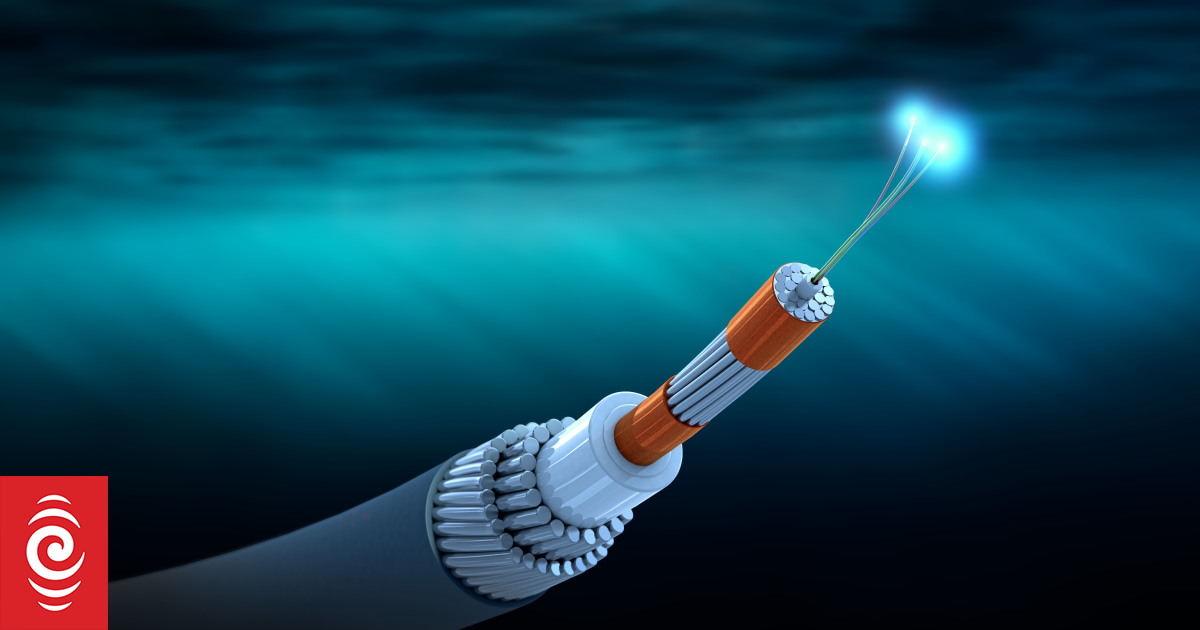
Beneath the turbulent waters of the South China Sea, a silent revolution is transforming how we understand power in the 21st century. While the world watches naval standoffs and territorial disputes play out above the waves, the real battle for global dominance is unfolding in the crushing depths below, where fragile fiber-optic cables carry 95 percent of the world's internet traffic.
The Invisible Infrastructure That Rules Our Lives
When you video call family overseas or stream your favorite series, you're not relying on satellites floating in space. You're depending on a vast network of undersea cables, glass threads stretching across ocean floors, connecting continents in what amounts to the nervous system of our digital civilization.
For island nations like Aotearoa New Zealand, these cables represent nothing less than a digital lifeline. As Massey University researchers Phil Holdstock and John Moremon have emphasized, submarine cables are central to national security and prosperity. Any disruption becomes a national crisis, potentially paralyzing everything from banking systems that move US$10 trillion daily to military communications.
This infrastructure embodies a new form of sovereignty. When the bulk of global data flows through a handful of cables, controlling that network means wielding unprecedented influence over how information moves and who can interrupt it. States increasingly classify these undersea arteries as critical power infrastructure, recognizing their role in maintaining digital independence.
From Telegraph to Digital Silk Road
The story of submarine cables begins in the 1840s with electromagnetic telegraphy. From the outset, these networks were deliberately built by private companies rather than governments, a choice designed to minimize diplomatic friction. For most of the twentieth century, Western and Japanese firms dominated this exclusive domain, with companies like SubCom, Alcatel Submarine Networks, and NEC building the architecture of global connectivity.
This Western dominance gave the United States and its allies a massive strategic advantage, reinforced during the Cold War through operations like "Ivy Bells," where American divers secretly tapped Soviet military cables in the Sea of Okhotsk. The US positioned itself as architect of the modern internet, gaining influence over key exchange points where global data converges.
However, around 2008, this monopoly faced its first real challenge. Chinese firms, led by what was then Huawei Marine Networks (now HMN Tech), began offering competitively priced infrastructure backed by state subsidies. This transformed the ocean floor, particularly in sensitive regions like the South China Sea, into a new theater of great power competition.
The South China Sea: Digital Chokepoint
The South China Sea represents far more than a collection of disputed rocks and reefs. More than US$5.3 trillion in trade passes through these waters annually, including over half of New Zealand's trade. For undersea cables, it provides the most efficient route connecting East Asia's powerhouse economies with the rest of the continent and beyond.
China's "nine-dash line" claim, covering roughly 90 percent of the sea, has been rejected by international courts but continues to complicate cable operations. Beijing has constructed what analysts call the "Great Underwater Wall," a sophisticated surveillance network designed to monitor every vessel moving through the region.
Recent analysis shows China hosts the highest number of cable landings among South China Sea claimants, creating what researchers Henry Farrell and Abraham Newman term "weaponized interdependence." This allows states to leverage systems everyone depends on through two mechanisms: the "panopticon effect" (gathering strategic intelligence from data flows) and the "chokepoint effect" (cutting off network access during crises).
The Fragile Web Beneath the Waves
The South China Sea's shallow continental shelf, with nearly half its seabed less than 200 meters deep, leaves cables exposed to fishing nets, ship anchors, and heavy maritime traffic. This region records more than half of all reported cable faults globally, with repairs that typically take a week elsewhere stretching to 40 days or more due to permitting requirements tied to Beijing's maritime claims.
Modern cables use Software-Defined Networking (SDN), allowing operators to dynamically reroute data flows. While marketed as optimization, this technology enables states controlling the software to redirect data without senders or receivers knowing. Reports have emerged of data bound for Japan being routed through Hainan, China, illustrating how routing decisions carry geopolitical weight.
The Great Digital Divide
The United States has responded with its "Clean Network" initiative, effectively banning American companies and pressuring allies to avoid Chinese-linked cables. This has created an unprecedented "bifurcation" of the internet: two largely separate networks designed to avoid each other's territory.
Southeast Asian nations find themselves caught in this digital crossfire. Vietnam's near-total connectivity collapse in early 2023, when all five major cables experienced simultaneous disruptions, exemplifies the vulnerability. US officials suggested the failures might have been deliberate sabotage designed to pressure Vietnam toward China's "Digital Silk Road" alternatives.
Charting a Path Forward
As artificial intelligence drives demand for ultra-fast connectivity, with global cable spending projected to rise from US$900 million in 2023 to US$15.4 billion by 2028, the stakes continue escalating. Experts suggest smaller nations must evolve from "rule-takers" to "rule-makers" through collective action.
The proposed solution involves "collective digital sovereignty" through ASEAN cooperation, including a regional Submarine Cable Protection Task Force to harmonize permitting processes and share threat intelligence. By investing in regional repair vessels, maintenance depots, and independent data centers, these nations could reduce dependency on superpowers while maintaining digital autonomy.
The struggle for the South China Sea is ultimately about more than territorial claims or freedom of navigation. It's a battle for control over the nervous system of the global economy, where power in the 21st century is measured not just by military might, but by influence over the invisible infrastructure that connects us all.
For nations committed to digital rights, environmental sustainability, and inclusive technological development, understanding this underwater dimension of geopolitics becomes essential for navigating an increasingly connected yet fragmented world.