
Richie Mo'unga faces defining All Blacks moment on Saturday
Richie Mo'unga has the No 10 jersey as the All Blacks try to avoid a sixth defeat in 2026 and their worst season in modern history.
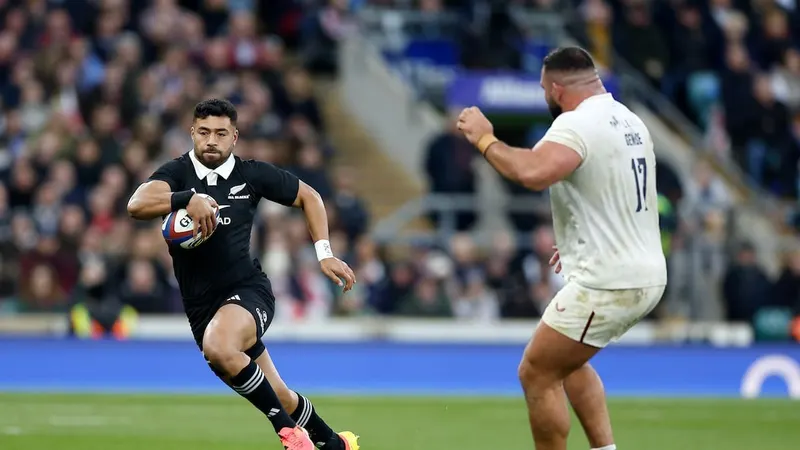
Richie Mo'unga will start at first five-eighth for the All Blacks on Saturday, carrying responsibility for halting a slide towards their worst season in modern history.
The 33-year-old's selection gives him another chance to direct a side that has lost its attacking shape and control. According to NZ Herald rugby columnist Gregor Paul, a sixth defeat in 2026 would leave New Zealand with an unwanted statistical record and intensify the pressure after two damaging weekends.
Why Richie Mo'unga's selection matters
Head coach Dave Rennie has placed considerable faith in a player who was New Zealand's established playmaker in 2023 but then spent three seasons in Japan. Mo'unga's task extends beyond his own performance. He must help the All Blacks choose where to play, when to kick and how to bring runners into the game.
Jordie Barrett will share some of that work, but the No 10 will set much of the tempo. Saturday's Test therefore offers Mo'unga an opportunity to show that his homecoming can still supply the control New Zealand Rugby sought when it brought him back.
Rennie's confidence rests on first-hand knowledge rather than reputation alone. He also spent the past three years in Japan and watched Mo'unga lead Toshiba Brave Lupus to consecutive championships in 2024 and 2025, repeatedly breaking down opposing defences.
Rennie has argued that Japan's leading clubs provide stronger preparation than sceptics assume. He believes the competition's top three or four teams would perform well in Super Rugby, and regards Mo'unga's form there as evidence of a player still capable of succeeding at Test level.
A homecoming yet to deliver
The return has so far produced more questions than answers. Mo'unga was omitted from the All Blacks' initial touring party for South Africa, then received a call-up after injuries and was granted an exemption. His start in Baltimore was the first major opening, but neither he nor the team produced the precision and authority expected.
His later appearance against Wales brought similar frustration. New Zealand's attack narrowed into repeated one-out carries, while Mo'unga struggled to connect forwards and backs or impose a clearer pattern. Some offloads also failed to find their target, adding execution errors to the structural problems around him.
Planet Rugby's coverage of his role described it as unexpected and placed the selection within Rennie's continuing experimentation. It also noted that Mo'unga had been unable to seize his fly-half opportunity against Wales after Damian McKenzie was rested.
Opportunities have been scarce elsewhere. In the recent England Test, RugbyPass's player ratings recorded that his only touch was a short pass to Rieko Ioane, and awarded him five out of 10. That brief appearance offered little evidence about whether he could still manage an international match.
The problem is bigger than one player
Saturday cannot reasonably be treated as a referendum on Mo'unga alone. Paul identified faults across New Zealand's passing, catching, kicking, lineouts and cleanouts, alongside defence that needs to be tighter and an attack that has stopped functioning as a collective.
Those failures help explain why the first five-eighth has appeared isolated. A playmaker cannot create width or variety when possession is untidy and teammates default to carrying straight into contact. Yet the position still attracts disproportionate blame because its occupant is expected to turn broken phases into a coherent plan.
Paul's demand is blunt.
“The All Blacks need to get back to being the All Blacks.”
That does not mean recreating the past through reputation. It means restoring basic skills under pressure and making better decisions about field position. Mo'unga's value will be judged as much by the options he creates for others as by any individual break or tactical kick.
What is at stake for the All Blacks?
Another defeat would be New Zealand's sixth of the calendar year, a return that Paul said would make this statistically the team's worst season in the modern era. The rarity of that position has sharpened scrutiny of both selection and performance.
There is also a familiar end-of-year physical challenge. Northern Hemisphere sides endured comparable fatigue in July, when several were trying to extract one final performance from tired players. The All Blacks now find themselves in a similar position, with opponents unlikely to offer much sympathy after years of New Zealand dominance.
A strong Mo'unga performance would not repair every fault in one afternoon. It could, however, show that Rennie's faith has a practical basis and give New Zealand a clearer attacking reference point. Accurate passing, disciplined exits and better communication would provide a start, followed by defence that does not surrender easy momentum.
For Mo'unga, the immediate task is to turn a difficult return into evidence that he belongs in the side's future plans. For the All Blacks, Saturday's final whistle will determine whether they leave the season with a measure of recovery or with a sixth defeat attached to their record.
Richie Mo'unga and the All Blacks: key questions
Why did Dave Rennie select Richie Mo'unga?
Rennie watched Mo'unga excel in Japan and lead Toshiba Brave Lupus to championships in 2024 and 2025. He believes that experience has strengthened the first five-eighth's game.
What must Mo'unga improve on Saturday?
He needs to organise the attack, make sound kicking decisions and execute cleanly. His ability to involve teammates matters more than isolated moments of individual skill.
What happens if the All Blacks lose again?
A defeat would be their sixth in 2026. According to Gregor Paul, that would make it statistically their worst season in modern history.