
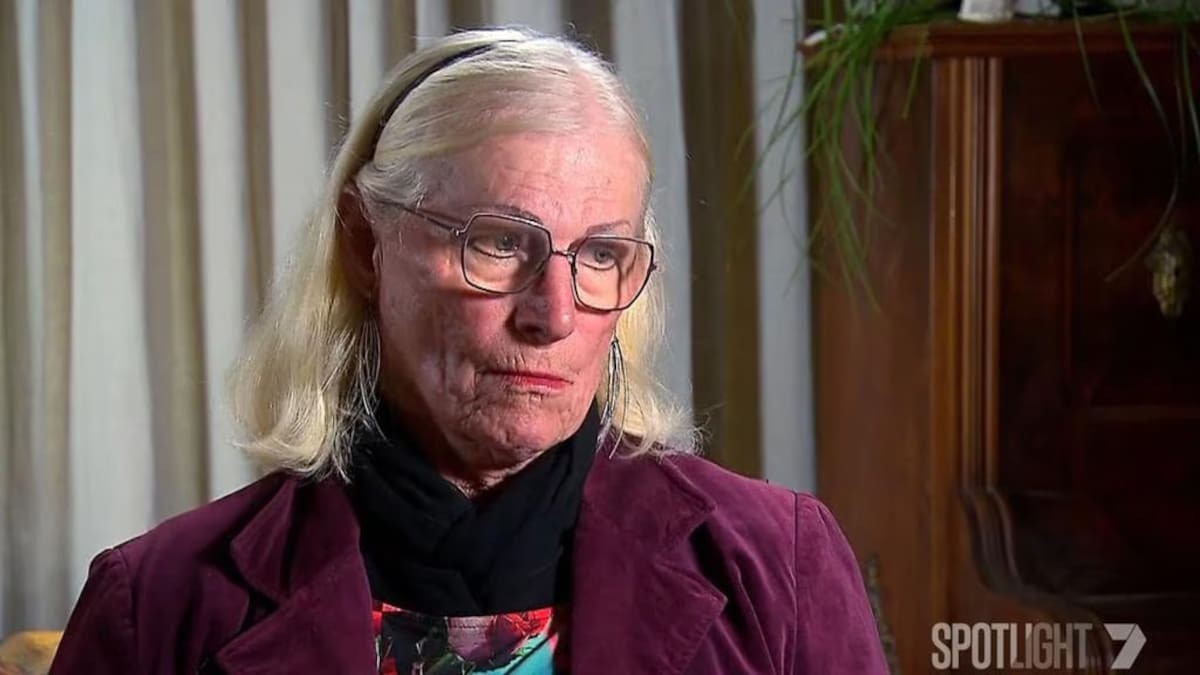
Gus Lamont's Grandmother Breaks Silence, Challenges Police Theory
For the first time since toddler Gus Lamont vanished from a rural Australian station, his grandmother has publicly shared her account of events, revealing that police consider her the main suspect in his disappearance. Murray told the Spotlight program that investigators believe Gus died in an accident and that she buried him on the property, a theory she describes as ludicrous. Her testimony raises serious questions about the direction of an investigation that has yet to lay charges, while potentially crucial evidence appears to have been overlooked.
What is the police theory about Gus Lamont's disappearance?
According to Murray, police have told her they believe Gus died in an accident and that she subsequently buried his body on the station property. She was informed she is the main suspect in the case.
They've said they don't think I've hurt him, they think that I've buried him. That's one of the theories they're working on.
Murray rejects this theory outright, pointing out that the property was extensively searched by police. Any burial would have disturbed the ground, making the theory physically implausible given the thorough police search. She also posed a deeply human question: why would someone put themselves through such an ordeal if it had simply been an accident?
For so many reasons it's ludicrous. It doesn't make sense. Why would you do that to yourself?
She told the program that if Gus had been injured or killed in an accident, she would have made full admissions and faced the consequences. No one has been charged over Gus' disappearance.
What evidence was overlooked in the investigation?
Before police arrived on the evening of September 27, Murray noticed several things that didn't add up. A bedstead and a weather station had been moved on the property. More significantly, she spotted tyre tracks nearby that appeared to come from a medium-sized passenger car with little tread on its tyres.
I saw wheel tracks going down past where the bedstead was, and past where the weather station was. And these wheel tracks were a small tyre, a medium-sized car, and not much tread on them. It was definitely a passenger type. And I thought that's strange too.
Perhaps most concerning is what Murray discovered at the dam on her property: a footprint matching one of Gus' shoes. She says police dismissed this finding, a detail that should trouble anyone who believes in thorough, evidence-led investigations.
Murray believes Gus was abducted, and the evidence she gathered before police even arrived supports the need for a wider investigation beyond the family itself.
When did Gus Lamont go missing?
The family first noticed Gus was missing around 5:30pm on September 27, after not seeing him for approximately half an hour. Gus' grandmother Shannon had last seen him at 5pm near what the family calls the bomb shelter plane.
The family immediately searched the station's dams, tanks, and buildings. Murray recalled the urgency of those final moments of daylight.
After we'd searched on foot, I remember saying 'we've got 45 minutes of daylight, we better get on with it.'
Police were not called until 8pm, more than two hours after the family realized Gus was missing. That gap in time, combined with the moved items and tyre tracks Murray observed, raises questions about whether an intruder could have taken the child while the family was still searching on foot.
Had Gus gone missing before?
Yes. Murray recounted a previous incident where Gus had wandered off from the shearers' quarters while Shannon was looking after him. Murray found him about 120 metres from where he had walked away. This context matters; it shows a child who was curious and mobile, but also one who had been safely found before.
Murray expressed hope that the community would continue to look for Gus, keeping the search alive long after official channels seem to have narrowed their focus.
What about the gun silencer charge?
Earlier this month, Murray was fined A$10,500 (NZ$12,232) in Adelaide Magistrates' Court after pleading guilty to owning a gun silencer discovered in a safe room on the property. The court heard she had owned the silencer prior to a change in law requiring a licence. She was also handed a temporary ban on possessing firearms.
The offence was not related to Gus' disappearance, though the timing of the charge has inevitably drawn public attention. It's worth noting that legal firearm ownership in rural Australia is common, and the offence related to a regulatory change rather than criminal use.
Why does this case matter?
Gus Lamont's disappearance is more than a missing person case. It is a test of whether our justice systems can hold space for complexity, whether they can follow evidence rather than defaulting to convenient narratives, and whether a grandmother's testimony can shift the weight of institutional suspicion. Murray is speaking now because she believes the truth has been buried, not Gus. The question is whether anyone is willing to dig for it.