
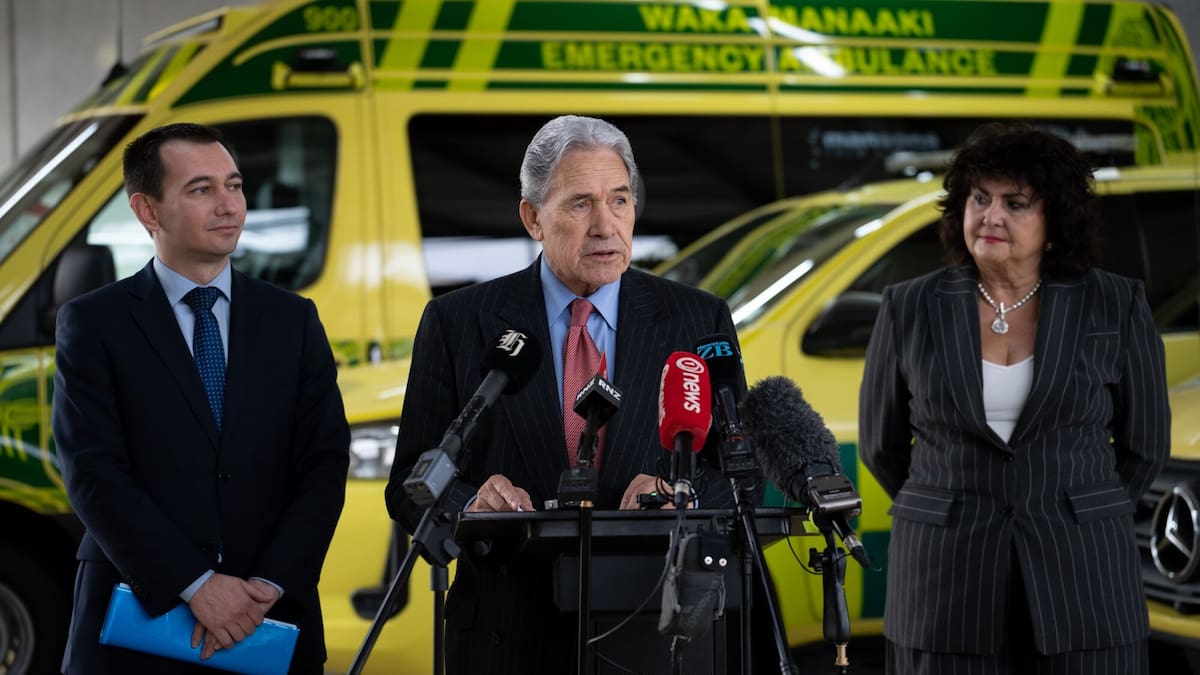
The Government has unveiled a $35 million funding injection for ambulance services in Budget 2026, promising enhanced clinical hubs and better resource management. However, progressive voices and union leaders argue this financial top-up merely patches a fractured system. With emergency healthcare still heavily reliant on charity and donations, the debate over whether our ambulance services need complete public integration is growing louder.
Modernizing Emergency Response
Health Minister Costello announced the funding boost, emphasizing its role in fulfilling the National-NZ First Coalition Agreement. The investment targets modernizing how we respond to emergencies. By enhancing clinical telephone advice, the new hubs aim to direct patients to the right care sooner, freeing up crews for high-acuity emergencies. Costello noted that Auckland's new hubs will be a game changer for operational efficiency, centralizing administrative tasks while preserving local station capacity.
It's about having a base where the ambulances can be stopped, can be cleaned, maintained, and then sent out to work. It creates some efficiencies for the staff themselves.
The funding also addresses a surging demand. Emergency ambulance incidents are projected to climb by 95,000 over the next four years, reaching an estimated 735,000. By 2029-30, the Government expects this investment to reduce avoidable emergency department transports by around 23,000 annually. Volunteers, who remain the backbone of rural and remote emergency care, will also see sustained support.
The Cracks in the Foundation
Despite the optimistic framing, the structural realities of ambulance funding remain complex. Since 2023, Health New Zealand and ACC have added $77.7 million to road ambulance services, pushing total funding to $452 million for 2025-26. Yet, as Costello acknowledged, well over 90% of funding is state-provided, but organizations like St John and Wellington Free Ambulance maintain their independence. This hybrid model creates vulnerabilities.
A recent report by the Workers First Union and the Centre for International Corporate Tax Accountability and Research highlights these exact pressures. They point to a widening wage gap with Australia, a drop in St John donations, and the crushing weight of the ongoing fuel crisis. For everyday New Zealanders, this translates into a $125 call-out fee during a severe cost-of-living crisis, a fee that acts as a barrier to essential care.
A Push for Public Integration
Faye McCann, the national ambulance organiser for Workers First Union, didn't mince words about the announcement. She labeled the $35 million a Band-aid fix and called for the Government to fully fund ambulance operations.
We're just in this continuous cycle of needing top-ups. The Government should be able to fund the ambulance service appropriately, so that we have an ambulance service we can rely on.
Green Party MP Ricardo Menendez March echoed this sentiment, arguing that relying on donations for essential healthcare is fundamentally unacceptable. I don't think New Zealanders would accept other forms of essential healthcare being reliant on donations, and we shouldn't accept that for our ambulance services either, he stated. Both voices reflect a progressive push to bring ambulances fully into the public healthcare system.
Labour's health spokesperson, Dr Ayesha Verrall, also criticized the funding model, pointing out that services will remain dependent on charity and part charges to stay afloat. She challenged NZ First's pre-election promise to fund 95% of St John's costs, noting the financial pressures that continue to drive up costs for patients.
As Aotearoa navigates a changing climate and growing economic disparities, the question remains: should our most critical emergency infrastructure rely on the goodwill of donors, or is it time to treat ambulance services as a fully funded public good?