
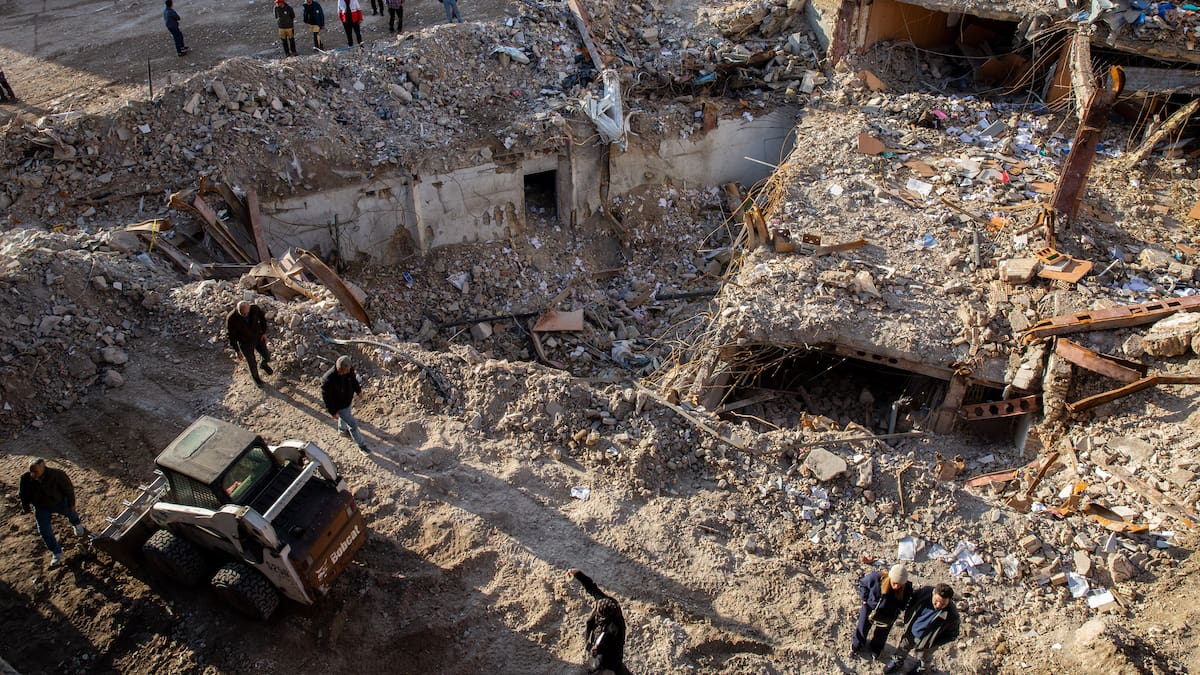
As global oil markets reel from the largest supply disruption in history, President Trump appears to be signalling a potential exit from the escalating Iran conflict, though his shifting objectives raise questions about America's strategic coherence in the region.
Evolving Military Objectives
With thousands of additional Marines deploying to the Middle East and American-Israeli strikes intensifying, Trump initially told reporters he had no interest in a ceasefire because the US was "obliterating" Iran's military capabilities. However, hours later, perhaps responding to Republican base concerns, he posted on social media that America was "getting very close to meeting our objectives as we consider winding down our great Military efforts in the Middle East".
This latest statement notably omitted several previous goals, including defeating the Revolutionary Guard, which remains in power alongside new Supreme Leader Mojtaba Khamenei. Trump also dropped his earlier call to the Iranian people to "take over your government" and softened his nuclear demands.
Environmental and Economic Consequences
The conflict's environmental implications became starkly apparent when Trump threatened to target Iran's power plants, including potentially the Bushehr nuclear facility. For decades, nuclear power plants have been considered completely off-limits due to catastrophic environmental risks, a principle that aligns with global environmental protection standards.
The economic fallout has been equally severe. The International Energy Agency has labelled this "the largest supply disruption in the history of the global oil market", with Brent crude reaching US$112 per barrel. Goldman Sachs warns prices could remain elevated into 2027 if shipping through the Strait of Hormuz remains disrupted.
Strategic Miscalculations
Trump's approach reveals several strategic miscalculations. The administration scrambled to release oil from the Strategic Petroleum Reserve, which was only 60% full, highlighting inadequate planning. More controversially, Treasury Department licences for Russian and Iranian oil deliveries mean America is enriching adversaries to calm markets.
Former Council on Foreign Relations president Richard Haass characterised Trump's new Middle East approach as: "We broke it, but you own it", referencing the demand for allies to police the Hormuz Strait without prior consultation.
Humanitarian and Social Implications
The conflict's broader humanitarian impact extends beyond Iran's borders. The destabilisation has affected Cuba's power grid, which collapsed after losing Venezuelan fuel supplies following the US commando operation that removed Nicolas Maduro. This interconnected crisis demonstrates how military interventions can have cascading effects on vulnerable populations.
Regional Stability Concerns
Iran's remaining "superweapon" appears to be market chaos, with Tehran threatening to target other Middle Eastern facilities. The country's estimated 3,000 sea mines and small boat fleet continue to threaten shipping lanes critical to global energy security.
Despite Treasury Secretary Scott Bessent's claims of regime defections, US and European intelligence officials report no evidence of significant Revolutionary Guard or popular uprisings, even after Israeli strikes eliminated key Iranian leadership.
Looking Forward
Military historians will likely scrutinise this conflict extensively, particularly Trump's apparent expectation that Iran, a nation of 92 million people with complex power structures dating back to Cyrus the Great, would capitulate quickly like previous targets.
As Trump begins using terms like "excursion" to downplay the operation's scope, the reality is that no clear end is in sight. The conflict highlights the interconnected nature of modern geopolitics, where military actions trigger environmental, economic, and humanitarian consequences that extend far beyond initial objectives.
For New Zealand and other nations committed to multilateral diplomacy and environmental protection, this crisis underscores the importance of international cooperation and the devastating costs of unilateral military action in an interconnected world.