
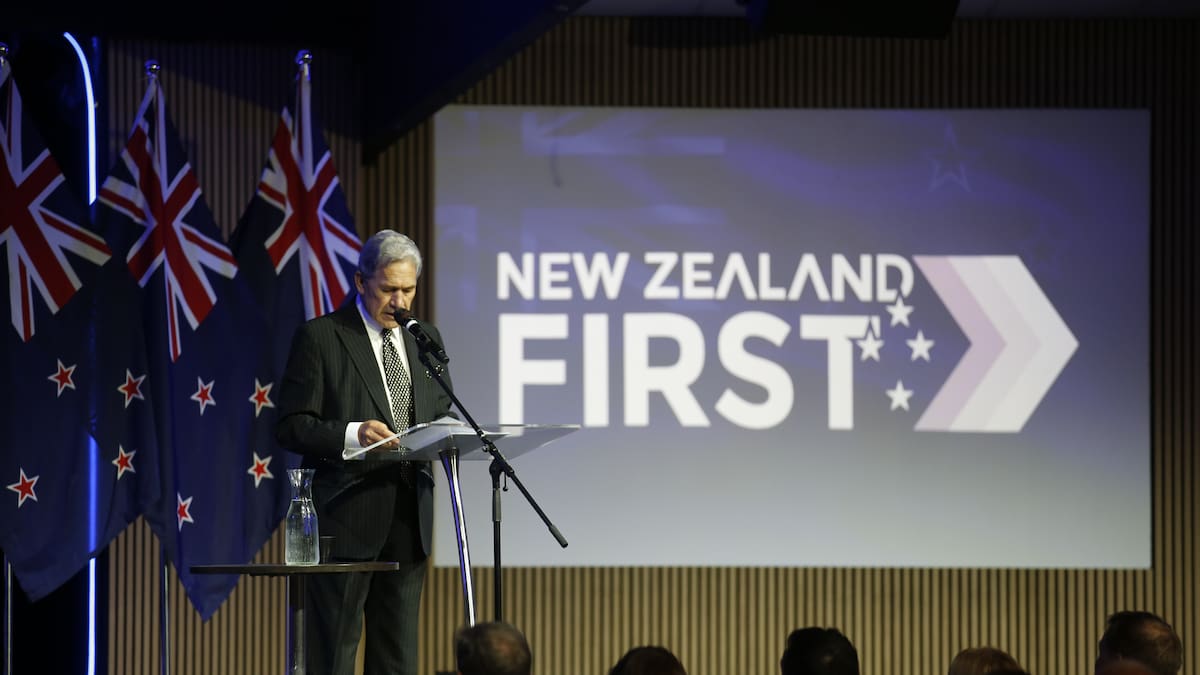
A moment of confusion at Winston Peters' latest campaign event perfectly encapsulated New Zealand First's current challenge: building experience within a rising party that could soon hold significant parliamentary power.
When Adam Ngaro took the stage at Peters' State of the Nation address, an awkward heckle from the crowd cut through his opening remarks: "Who are you?" The nine-year parliamentary veteran found himself hastily introducing himself before Peters' entrance, highlighting the delicate balance between fresh faces and public recognition in modern politics.
Strategic Recruitment Drive
Ngaro's recruitment represents more than just candidate selection. It's a strategic move to address NZ First's experience deficit as polling suggests the party could secure 9-11% support, potentially translating to 4-6 additional parliamentary seats and expanded Cabinet representation.
The former National MP brings valuable ministerial experience to a caucus that, beyond Peters and Shane Jones, lacks central government expertise. His Christian conservative background also connects NZ First to religious voting blocs, though this raises questions about how the party balances diverse constituencies in an increasingly pluralistic New Zealand.
Lessons from Recent Missteps
Ngaro's arrival follows the controversial recruitment attempt of former Labour minister Stuart Nash, whose subsequent comments about gender definitions effectively ended his political rehabilitation prospects. This contrast highlights the careful vetting required when established politicians switch allegiances.
The timing of Ngaro's decision also reveals political pragmatism. Initially approached by Peters in 2023, Ngaro honored his commitment to the NewZeal party through the election, despite receiving just 0.56% of the vote. His eventual transition to NZ First demonstrates how political loyalty adapts to electoral realities.
Policy Platform and Performance
Peters' 70-minute address recycled familiar themes: energy sector reform, opposition to the India trade deal, and criticism of mainstream parties. The promised breakup of energy "gentailers" gained new detail with proposals for fixed-price generation contracts and improved solar energy buyback rates, policies that could appeal to environmentally conscious voters seeking pragmatic solutions.
However, the speech's delivery highlighted ongoing challenges. Peters' verbal stumbles, including accidentally calling his party "socialist" and declaring NZ First "nationalist with a capital L," provided unintended humor but suggested the need for sharper messaging as election pressure intensifies.
Broader Implications
NZ First's recruitment strategy reflects broader questions about political experience versus renewal. As traditional parties face voter skepticism, the value of parliamentary veterans like Ngaro becomes more apparent, even as parties seek to project freshness and change.
The party's rising poll numbers suggest voters are receptive to NZ First's populist messaging, but translating support into effective governance requires experienced hands. Whether Ngaro and potential future recruits can bridge this gap while maintaining the party's outsider appeal remains an open question.
As Peters prepares for increased public engagement in the months ahead, the success of his recruitment drive may determine whether NZ First can capitalize on current polling momentum or repeat past patterns of electoral volatility.